


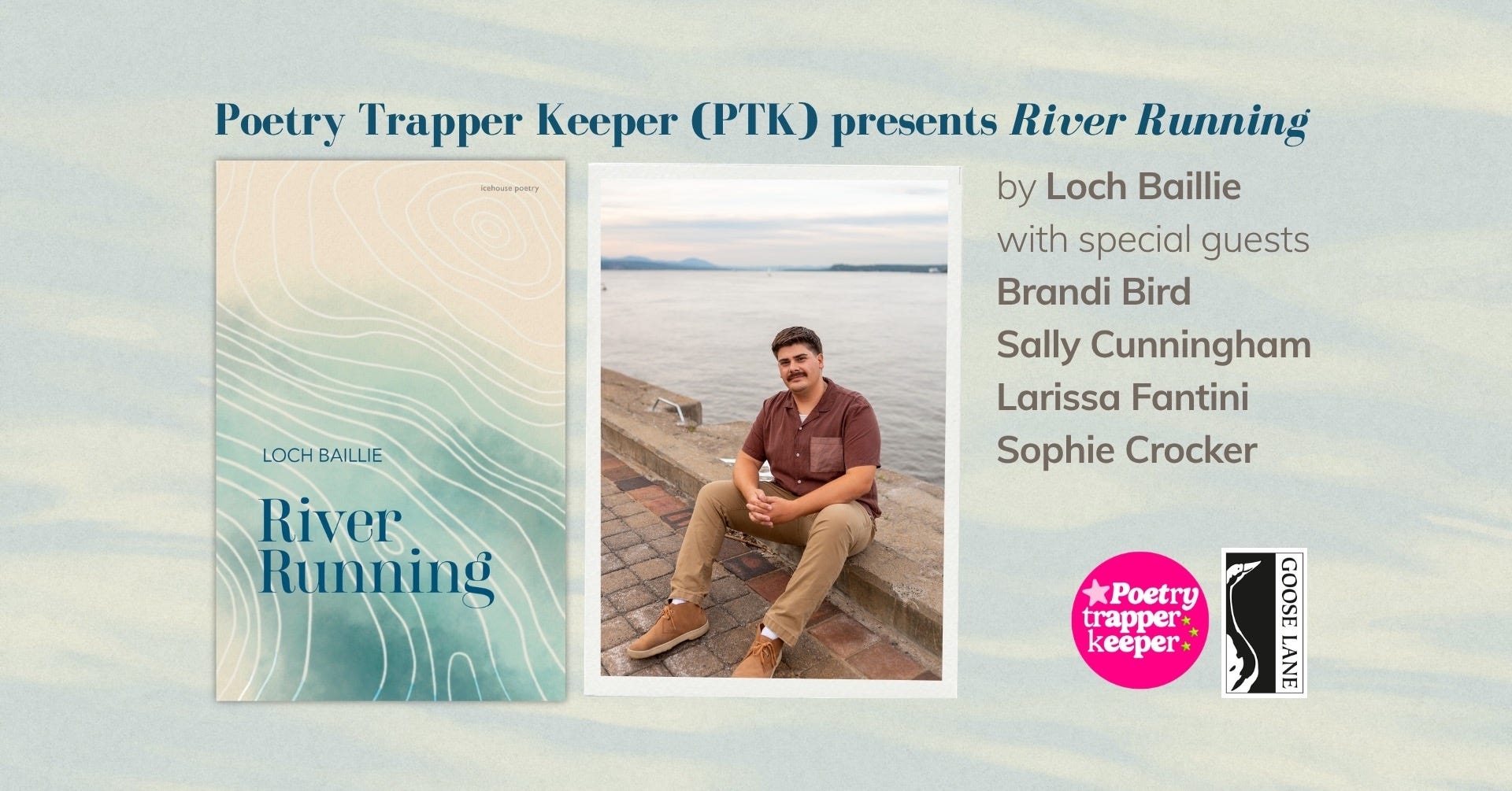
Hello poets, feels like it’s been forever (because it has). Sophie and I have been busy writing oh so many thesis words, but we couldn’t turn down the opportunity to partner with longtime Trapper Keeper, Loch Baillie to launch his new poetry book River Running (Goose Lane Editions, 2026). We will be hosting their Vancouver launch (at Cross & Crows on July 16th) and we hope to see you there (our first official PTK event in Canada!). We were so excited to work with Loch on this launch and we sat with him to ask him some questions about his process! Please enjoy this interview & read on for one of the many gorgeous poems which you can find in River Running!
On poetry, fire stations, and relational writing, an interview with Loch Baillie
P.T.K.: Hi Loch! Who are you? What do you do? Can you tell us a little more about yourself?
Hi Larissa! I am a New England-born writer and editor based in Quebec City. I live with my fiancé, our cats, and way too many books.
P.T.K.: The very first poem in your new poetry collection River Running is titled “Truthsayer.” Why did you choose that poem as the first one?
When I eventually had enough poems to start putting together a full-length collection, I printed them all out and laid them on my father’s dining room table while I was visiting home one summer. I began organizing them in the mysterious way poets do (mainly by vibes) and it quickly became evident to me that “Truthsayer” was the entry point into the world of River Running. I see it as a kind of doorway, with the speaker waving the reader in: “No more metaphors tonight / I come to tell you nothing / but the truth.” “Truthsayer” is a play on the word “soothsayer,” meaning a person who can predict the future.
P.T.K.: Truthsayer starts with the line “Where else to begin but the mouth”; speaking of the mouth, there are so many references and descriptions of food in your work. What is compelling about what is edible?
Are there? Kidding (kind of). People keep pointing out different things about the book that I didn’t notice before. But yes, you’re right. Lots of mouths and lots of things we put in them. It’s important to me to invoke the five senses as much as possible in my poetry, and I think taste (similarly to smell) is often the most evocative sense. Have you ever read or seen Because of Winn-Dixie? There’s a candy in that story that has a secret ingredient: sorrow. I think there’s something compelling about the fact that something edible can evoke such a wide range of emotions.
P.T.K.: Ok, that was a great answer. River Running is split into sections and portions of this book were previously published as parts of chapbooks, how did it feel to revisit, reassess, and reframe those as a part of a new thing?
Yes, that’s right. I’ve been joking in interviews that the cat’s out of the bag on that front. The first section of the book, “Waite,” is a slightly updated version of my debut poetry chapbook Citronella (Anstruther Press, 2024). River Running also includes some of my previously published bilingual poems, including a handful from my second chapbook ice, dove, parachute (Cactus Press, 2024).
These poems were always part of a bigger project, so it feels great to have them reframed in the collection. I adore chapbook-length projects, but within the context of River Running you really get the full picture.
P.T.K.: That makes sense! You attended a PTK workshop way back in the day! Do you remember what you wrote?
Yessss. I believe it was the New Year’s Day workshop in January 2024, just a few weeks before I started seriously preparing my River Running for querying. My partner and our friends all went skiing and I stayed at the cottage we were renting to write poetry with complete strangers. It was such a lovely time! To be completely honest, I have no clue what I wrote. But I remember meeting some really talented folks from a bunch of cool places like Berlin and Helsinki and Amsterdam!
P.T.K.: You brought such good energy to the workshop, and I remember what you wrote! But it’s okay, I won’t spill. Speaking of “relational” writing, your parents make many cameos in your book, in your dedication, acknowledgements, and various poems. How do you think your home and upbringing have shaped your work?
I don’t think I’d be writing if I didn’t have the upbringing that I did. I was raised by two English teachers, and so reading and writing were a part of my everyday life. Library trips, book signings, and daily reading were all essential to my childhood and adolescence. I was raised by an American mother and a Canadian father, and so I grew up going to school in Massachusetts and spending much of my summers in Ontario.
I permanently relocated to Canada in 2017, around the same time that I started taking my writing more seriously. My Canadian identity has therefore shaped my work as much as my American identity has—and much of that duality fuels the poems in River Running.
P.T.K.: Your book deals a lot with leaving home, missing home, finding new home(s). What (or who) is home right now?
My fiancé. Our cats, George and Archibald. My friends in Quebec City and Montréal. The colour green, in all its shades. My in-laws’ backyard. The St. Lawrence River.
P.T.K.: What does it mean to be a professional writer?
Great question! It’s what I’ve been aspiring to be for the last few years, and with the release of River Running, I’ve become more comfortable with calling myself a writer. I think that anyone can create art, but professionalizing an artistic practice requires ongoing training, networking, and artistic output. Being a poet is, as you can imagine, not the most lucrative profession—but coupled with things like editing and translation work, you can certainly start cobbling together an income for yourself.
P.T.K.: I love that way of talking about professionalizing artistic practice, and highlighting that it takes so many things beyond just making the art. But, speaking of “the art”, what does unprecious poetry mean to you?
I’ve been thinking about this a lot, especially as someone who comes from an academic background (the “joy to have in class” to “queer poet” pipeline is very real!). I often find myself in a bit of a catch-22 because for years, I was trained to “write well” (whatever that means), but now I want to break all of the rules. That said, I do believe that you should know the rules before you break them. Looking to tradition (in my case, English literature) is a useful blueprint… but I’m also very bored of the blueprint!
Much of River Running concerns breaking down the barriers between my two languages (English and French) in authentic/fun/sexy/unprecious ways. I’m currently working on book two, which leans into that even more—but it’s also my MA thesis, so again, I’ve still got one foot firmly planted in academia. No more degrees are on the horizon for me, though… at least for the moment. I really just want to do my own thing and make art that resonates with people.
P.T.K.: Why do you write?
I write to reveal truths about my lived experiences. I believe that poetry is an incredibly powerful truthtelling tool, and I’m interested in the role of truth in literature.
More broadly, I write because I have to. It’s my way of processing the world. If I could sing, I would. If I could paint, I would. But I can’t, so I write. It is one of my favourite things to do.
P.T.K.: Beautiful. You said you don’t carry a bag… So what do you carry or keep on your person daily? Are your pockets always full?
I love a good tote bag! But it’s true, I don’t carry one daily. I don’t carry much. Usually just my phone, which doubles as my notebook. I’ve tried to get back into handwriting, but I’ve always written poetry digitally, so it just makes sense for me. Aside from that, I’ve worn the same silver necklace for about a decade now, but I keep it tucked inside my shirt. Maybe it’ll make a cameo in a poem someday.
P.T.K.: Notes app poetry <3. Do you have a favorite place to work?
I write anywhere, but I love to write in beautiful places. I know a writer who runs retreats a few hours north of Quebec City, so sometimes I go up there to unplug and just focus on writing. I go for long walks by the salt marshes or read craft books in the solarium. I’ve had the opportunity to travel to some really gorgeous places in the past few years (I’m thinking mainly of Key West, Florida and Lapland, Finland). I think my favourite spots to work are places where I can curl up on a couch with a book or my laptop, or take long walks and look at the sky.
P.T.K.: Speaking of the sky, what’s your big three? Do you like that it usually snows on your birthday?
I see what you did there (read my book!). I’m a Taurus sun, Leo moon, Sagittarius rising. I think that means that I’m practical but emotional and also optimistic? I recently redownloaded Co-Star, so maybe I’ll find more answers there. I love living in Canada but could do without the snow in April…
P.T.K.: Your work often finds a balance between plainly stated confession and complex and intellectual concepts. Reading your book I had to consult the dictionary (google) quite a few times. I personally love being confronted by terminology I have yet to learn. I also am a collector of big/unusual/uncommon words and I keep a running list in the hopes I can use them in future poems. How do you choose your words?
This is such a good question! As a poet, I aim to be as specific as possible with my diction. That means Googling a lot. I am always looking up the names of specific plants and animals and concepts. For River Running, a couple examples are “nepomorpha” (an entomological term for “water bug”) and “apophenia” (perceiving meaningful connections between unrelated things). I like having a large toolbox of words to pick from and think it’s important to have one as a writer.
There’s an excellent essay by Susan Goldsmith Wooldridge in her book poemcrazy (Three Rivers Press, 1996) that talks about her process of gathering poetic material. She talks about words as things that can be borrowed, traded, or disposed of and emphasizes that poets can find language everywhere. But what I love about that essay is a generative exercise she calls “creating wordpools.” Wordpools are created by grouping words based on sounds or feelings. They don’t have to be related at all. She lists examples like “adobe hypothermia” and “slip spin serendipity.” The exercise is less about writing poetry and more about getting the words flowing. Paired with other generative exercises like labelling objects what they aren’t (a window labelled “portal”; an accent rug labelled “mystic”), I’ve found collecting and playing with language one of the most productive exercises in my poetic practice.
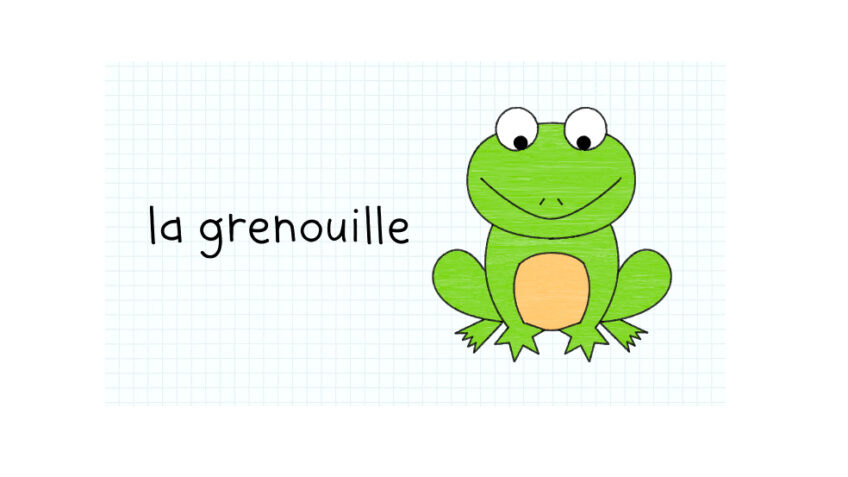
P.T.K.: Apophenia was one of the words I had to google, and once I did I realized it’s a perfect name for a poem, and I am so glad we get to publish it here! Speaking of language, What’s the hardest word to say in French?
Grenouille.
P.T.K.: Oh yea, we hear that, we also hear you make playlists? Tell us more (and share one please??)
Love a playlist. I can’t stand silence and listen to music most of the day while I work. I make playlists for each of my writing projects, and for River Running I ended up with four playlists (one for each section of the collection). This past spring, I combined and abridged the playlists to accompany the release of the book. It’s a little under an hour and available on Apple Music and Spotify if you want to listen.
Oh—and because I love Poetry Trapper Keeper, I’ve made a playlist with all the songs I’ve been listening to as I prepare for my summer book tour. It’s called “slows me down with july breath” and is only available via this interview.
P.T.K.: <3<3<3 we love exclusive content! Ok, we also hear something about Booktube? Were you part of the community?
You had to be there! Booktube was the precursor to Booktok. It was a bustling corner of the Internet throughout the 2010s and mainly focused on the YA lit scene. I would argue that it was integral to public discourse about literature for younger readers and contributed to the virality of series like The Hunger Games and The Mortal Instruments. My favourite Booktubers were Christine Riccio (Polandbananasbook), Kat O’Keeffe (Katytastic), and Ariel Bissett. Ariel now co-hosts the Canadian podcast Books Unbound with fellow ex-Booktuber Raeleen Lemay. It’s fantastic.
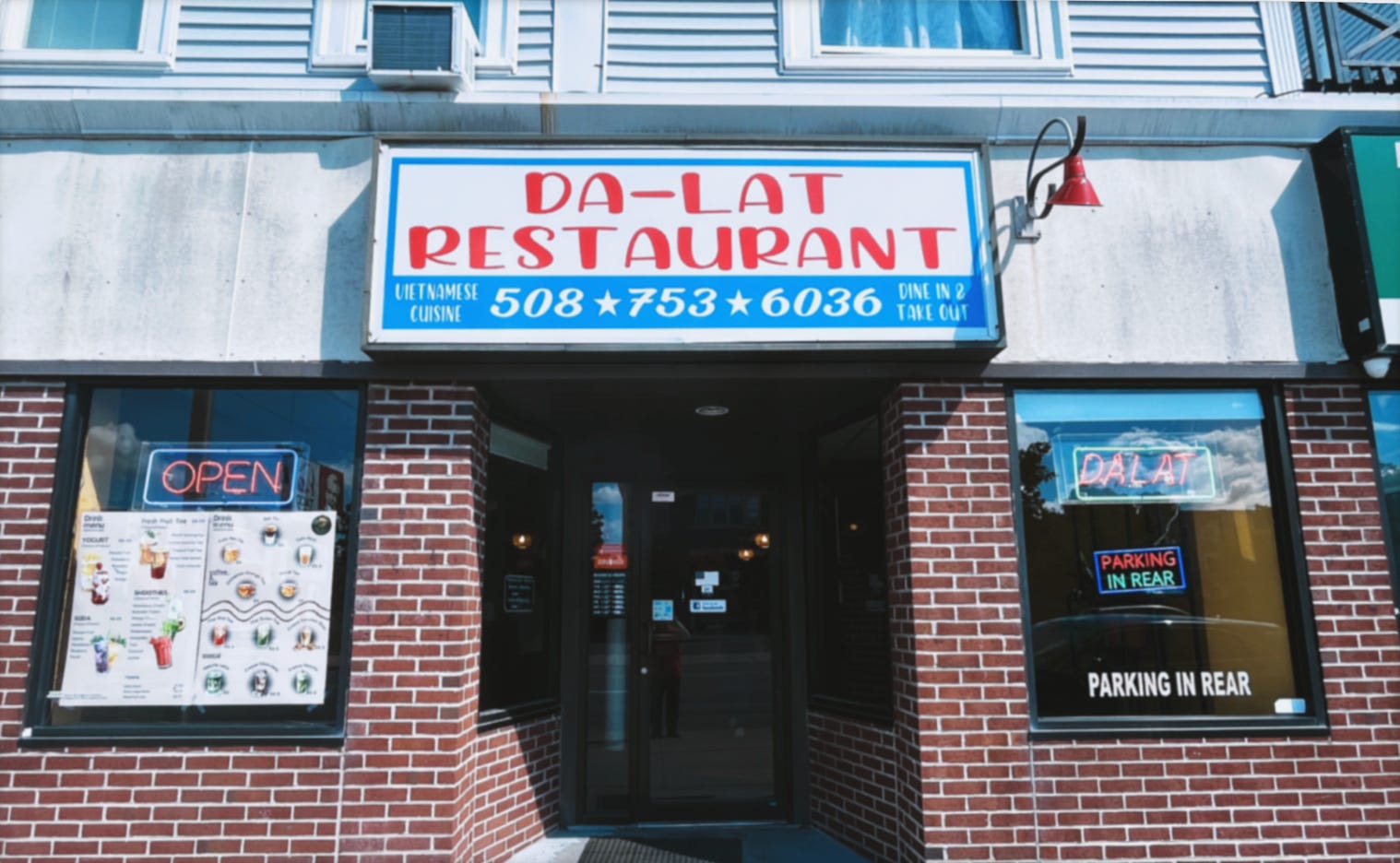
P.T.K.: Ok, the next two questions might only make sense to our readers once they’ve read your poem Apophenia, but we must ask: Where is the best Vietnamese restaurant in your hometown?
It’s called Da Lat and is located on Park Avenue in Worcester, Massachusetts. It opened in the 90s and was attached to a Hello Kitty gift shop/Vietnamese video store. As a kid, I always played with the owner’s daughter when my family would go out for dinner. We became family friends and my grandparents even went to the owners’ wedding way back when.
The restaurant was sold to new management at the end of 2025 after thirty years of being operated by the same family. The same chefs still work there, though, so I’ll have to stop in next time I’m home. If you’re in the area, do yourself a favour and order the canh chua gà (#74).
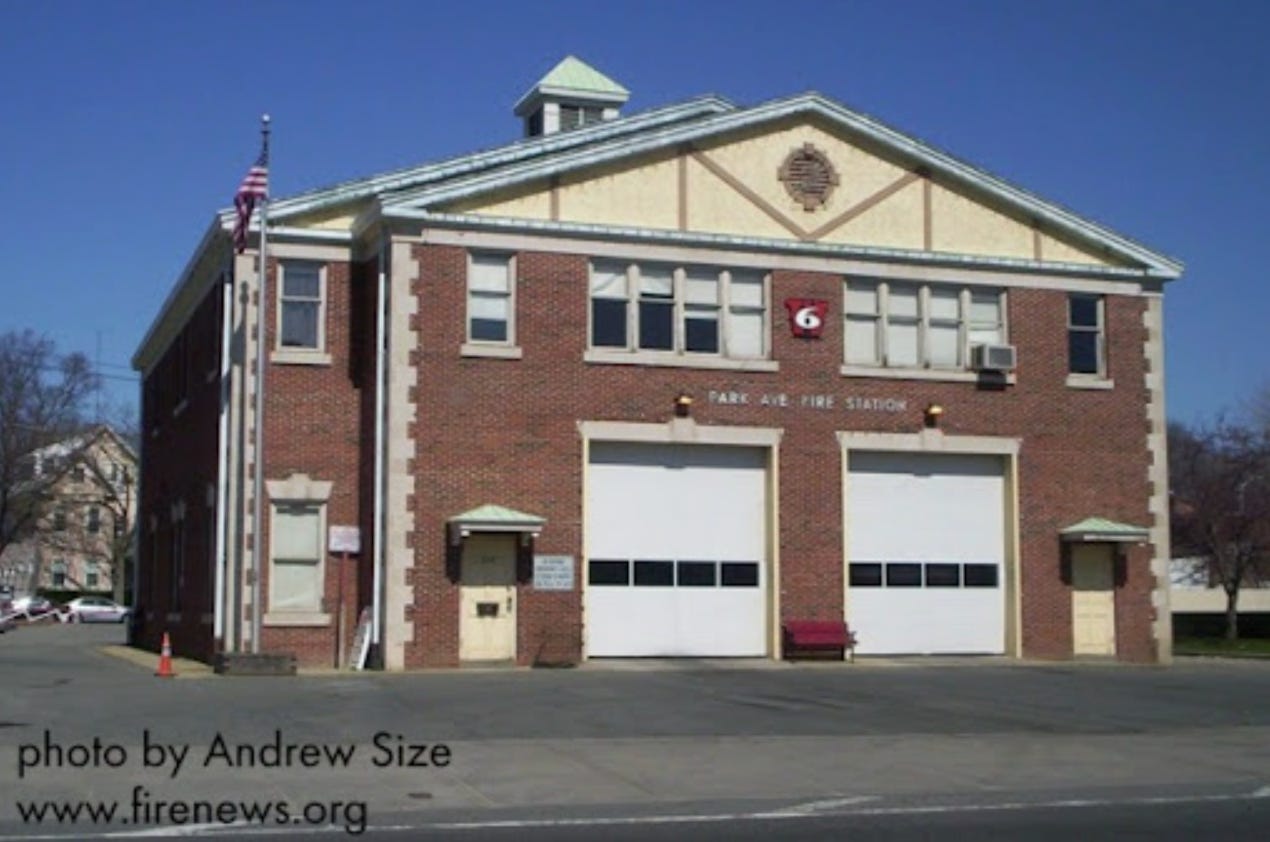
P.T.K.: Tell us about this fire station you visited when you were young.
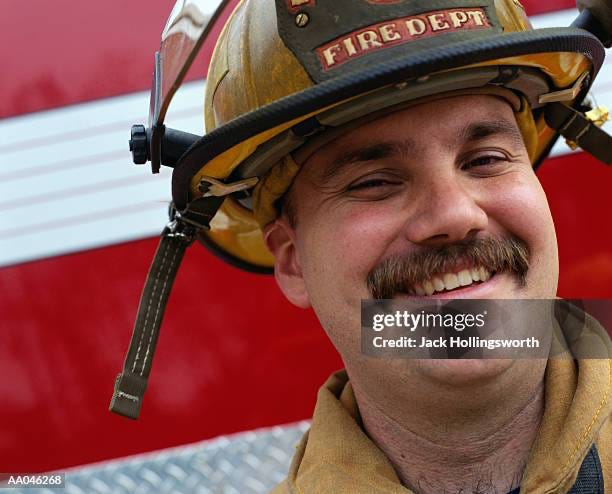
It’s *right* across the street from Da Lat, so we would always hear sirens whenever we’d grab a bite there. It’s truly frightening how many emergencies happen during just one meal. I don’t remember much of the station itself. I’m sure my parents brought me there a couple of times in the early 2000s. There were probably lots of firetrucks and charming firemen with mustaches. Ha.
P.T.K.: And lastly: Is there anything coming up that you’d like to invite people to?
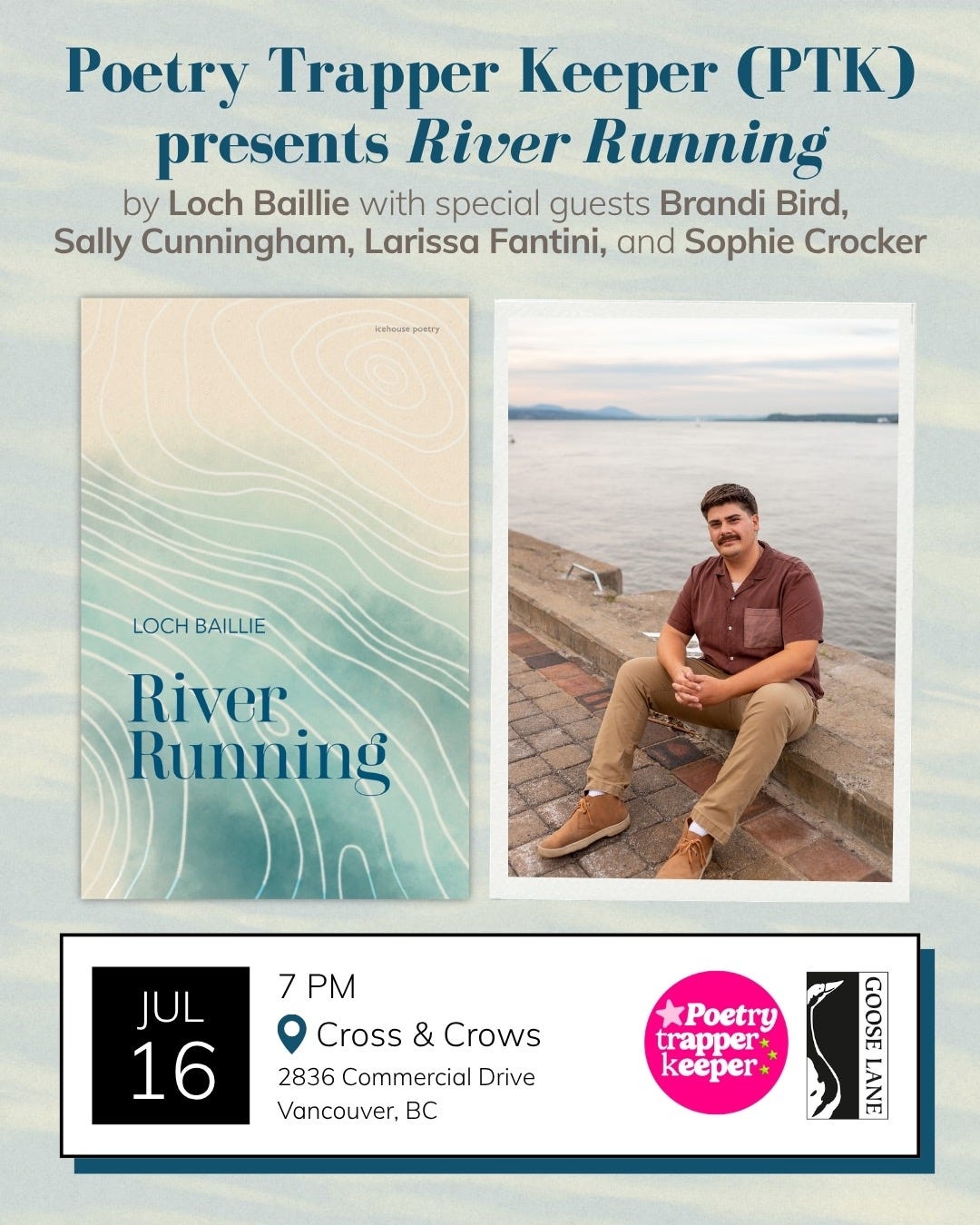
Yes! I am currently on book tour in British Columbia, Canada and I will be collaborating with Poetry Trapper Keeper (!) at Cross & Crows Books on July 16! Larissa, Sophie, and I will be reading alongside special guests Brandi Bird and Sally Cunningham. It’s an absolute dream of a lineup.
The event starts at 7pm and is free and open to the public. We’ll have signed books and exclusive stickers for sale, so I hope to see some of you wonderful PTK subscribers there!
Thank you so much Loch! We are so excited to celebrate you and your new book! Until then, here’s one of Loch’s gorgeous poems:
Apophenia
I conduct a survey wherever I go, ask
When you were young, did you also visit the fire station?

99% of the time, they say Yes
and the other 1% of the time they say What?

Depending on the reply, my follow-up
question is very important:

Where is the best Vietnamese restaurant
in your hometown?
“Apophenia” was originally published in River Running copyright © 2026 by Loch Baillie.
Reprinted by permission of Goose Lane Editions. For more information, please visit
www.gooselane.com.
See you soon! We can’t wait to be done with this dang degree so we can do even more PTK stuff like this <3 xoxo, Larissa